Reviewed · MEXICO CITY TOURS
Bean to Beverage: Roast and grind cacao into chocolate
Cacao takes center stage in this three-hour workshop, where you roast beans, grind them on a stone metate, and turn them into hot chocolate. The hands-on work gives you a feel for how much skill and effort sit behind a familiar drink, while the discussion connects cacao with Mayan and Aztec food traditions.
I like two things in particular: you get to make six different drinks, not just watch a demonstration, and Jim encourages you to experiment with ingredients such as chile, achiote, and avocado leaf. The home setting also makes this a relaxed way to spend part of a Mexico City visit, especially if you enjoy food with a story behind it.
One consideration: the class takes place in a home with two cats, and the building has no elevator. The class description places the home in Condesa, while the location field says State of Mexico, so confirm your exact meeting address before you set out.
- You do the work: Roast cacao beans, then grind them by hand on a metate.
- Six drinks are included: Make a range of hot chocolates using cacao and traditional ingredients.
- History meets the kitchen: Learn about cacao in the Mayan and Aztec worlds as you prepare it.
- A relaxed home setting: Jim and an assistant lead the class in a domestic kitchen.
- Dessert comes with the tasting: Finish your drinks with a sweet accompaniment.
- Check access and location details: There is no elevator, and the meeting point may vary by booking option.
Start with cacao, not a finished chocolate bar
This is a kitchen class built around the transformation of cacao. You begin with beans and follow them through roasting and grinding, rather than being handed a prepared mix and asked to stir. That change of pace is part of the appeal: you can see how a few ingredients and a lot of handwork become a drink.
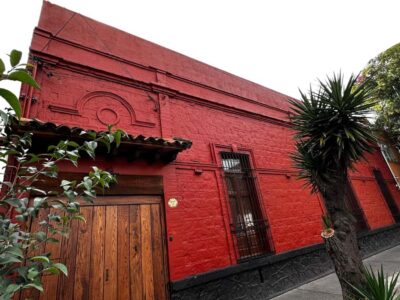
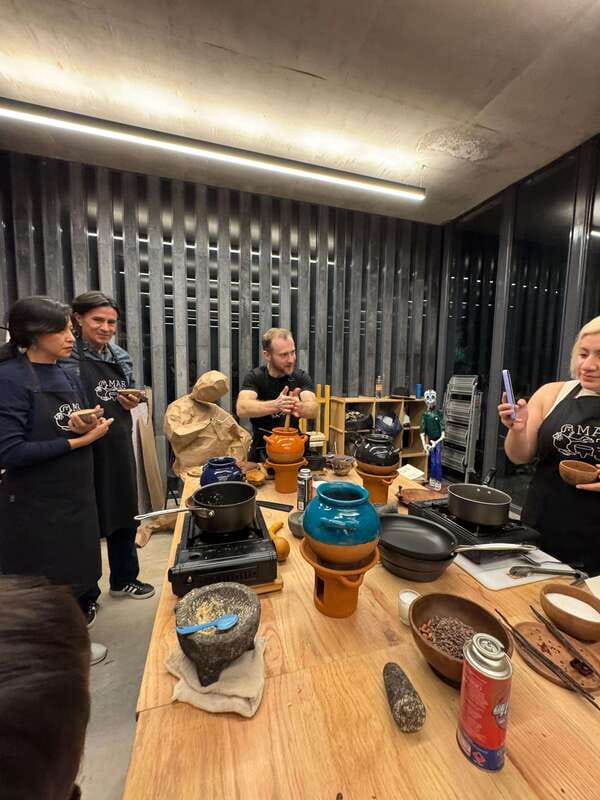
The session takes place at a home in Condesa, according to its description, and runs for three hours. Jim leads the class, with an assistant helping out. The atmosphere is meant to be relaxed and personal, a useful contrast to a large, formal demonstration where you might have little chance to ask questions or try things yourself.
The address needs a little care. The location is described as the State of Mexico in one place and as a Condesa home in another, while the meeting point can vary depending on the option you book. Before traveling across the city, check the details sent after booking and make sure you have the correct address.
Hear cacao’s story while you prepare it
The history is woven into the cooking rather than kept apart as a lecture. As you work, Jim explains cacao’s role in the pre-Hispanic period, with attention to Mayan and Aztec traditions. That context helps you understand why the class treats cacao as more than a sweet flavor or a modern health-food trend.
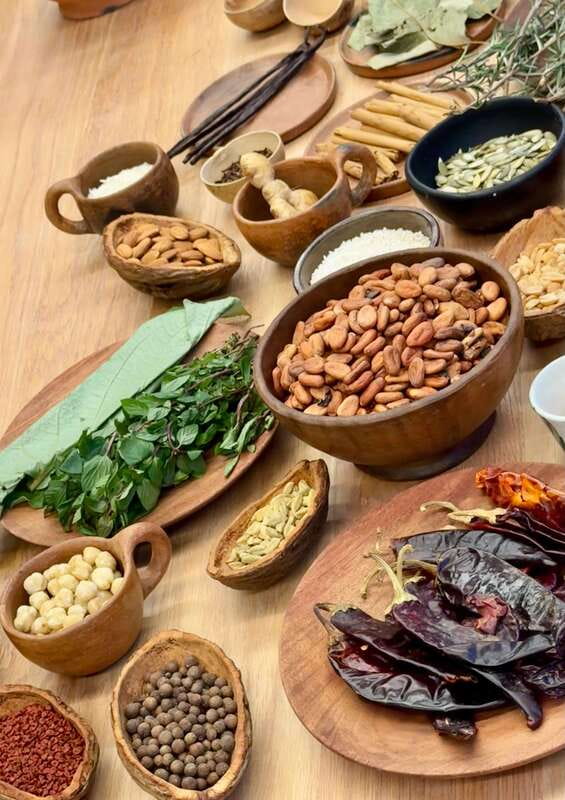
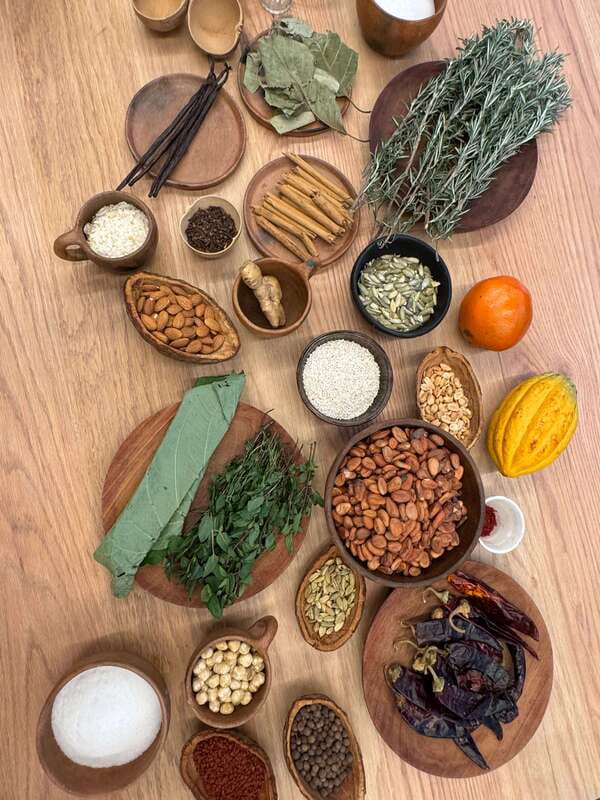
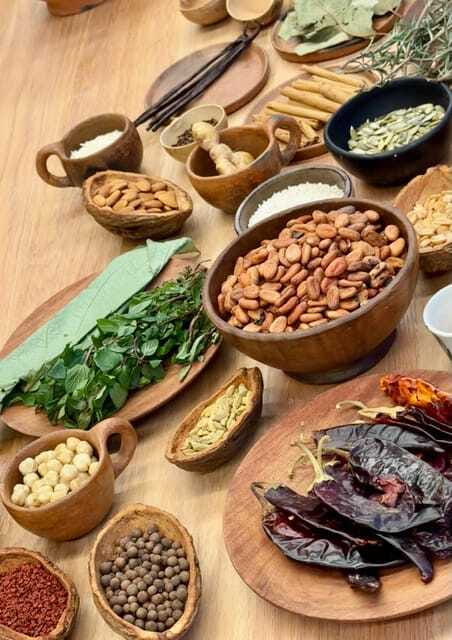
The session also looks at the ingredients that shape the finished drinks. The class draws on foods associated with Mesoamerican cooking, including chile, achiote, and avocado leaf. These are not just curiosities to sample; they give you a chance to explore how a hot chocolate can shift in aroma and taste when you change what goes into it.
Expect a hands-on lesson, not a tightly scripted tasting with one correct result. Jim encourages you to make your own combinations, which is a good fit if you like experimenting. If you prefer a classic sweet cocoa and do not want to try unfamiliar flavors, you can still learn from the process, but the creative tasting is a central part of the experience.
More dessert tastings around Mexico City:
- Mexico City: MUCHO Museum of Chocolate Entrance Ticket
★ 4.6 · 91 reviews - Cacao Chronicles: A Mexican Chocolate Tasting
★ 5.0 · 14 reviews - Magic Teotihuacan and Chocolate
★ 5.0 · 4 reviews
Roast the beans and work the metate
Once the introduction is under way, you put on an apron and roast your own cacao beans. Roasting is a key step in bringing out the bean’s character, and doing it yourself makes the process easier to remember than simply hearing it described. The class then moves to grinding, using a metate, the stone tool associated with traditional preparation.
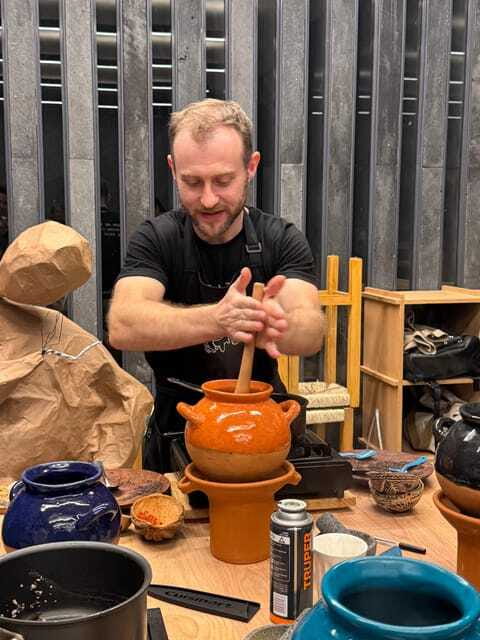
Grinding by hand takes effort. That physical work is one of the most rewarding parts of the workshop: it turns an abstract story about old food practices into something you can feel in your arms. It also helps explain why making chocolate from whole cacao is not quite the quick kitchen task a modern packet suggests.
The class is structured to take you from the basics of the bean through to brewing the finished drink. You do not need prior cooking experience to follow along. Families with children have found the activity workable for a range of ages, including children as young as eight, although every family knows best what will hold its own children’s attention for a three-hour class.
Make six drinks and test your own combinations
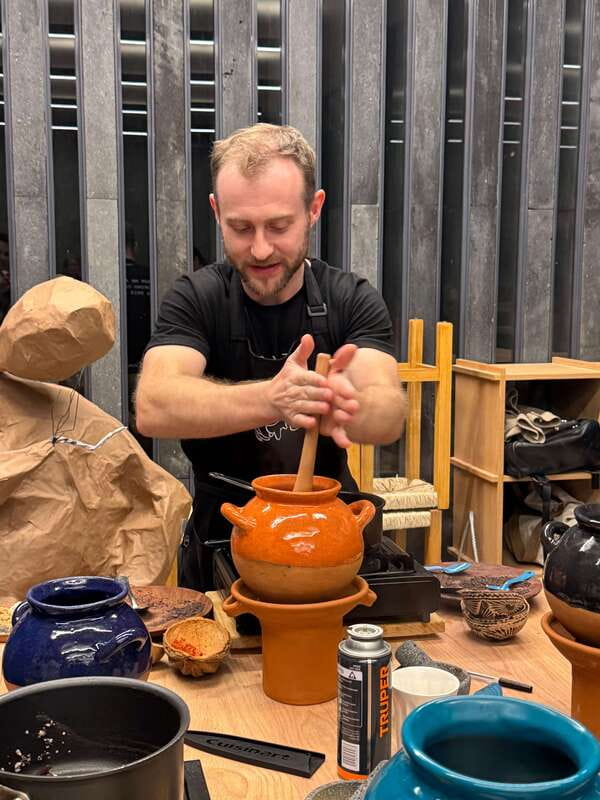
After roasting and grinding, you use your cacao to make six different hot chocolate drinks. The ingredients include chile, achiote, and avocado leaf, giving you a chance to see how traditional flavors can change the drink. The point is not simply to memorize a recipe. It is to compare, adjust, and find the combinations you like.
That creative freedom is a strong reason to book this class. It gives you a more active role than a tasting alone, and you come away with a better sense of how the base drink and added ingredients work together. If you have a curious palate, try the options with an open mind. If a particular flavor is unfamiliar, you can start cautiously and adjust as you go.
All ingredients for the six drinks are included, along with a dessert to accompany them. The final tasting gives you time to enjoy what you have made rather than packing up as soon as the last cooking step is done. Artisanal serveware adds a thoughtful touch to the table, though the heart of the experience remains the chance to prepare and taste your own drinks.
What the three-hour class feels like
Three hours is enough time for the history, roasting, grinding, drink-making, and tasting without making the workshop a rushed stop. It is still a substantial block of a day, so plan around it rather than trying to squeeze it between several distant appointments. The meeting point is a home, not a public attraction with a standard entrance, so allow time to get to the confirmed address.
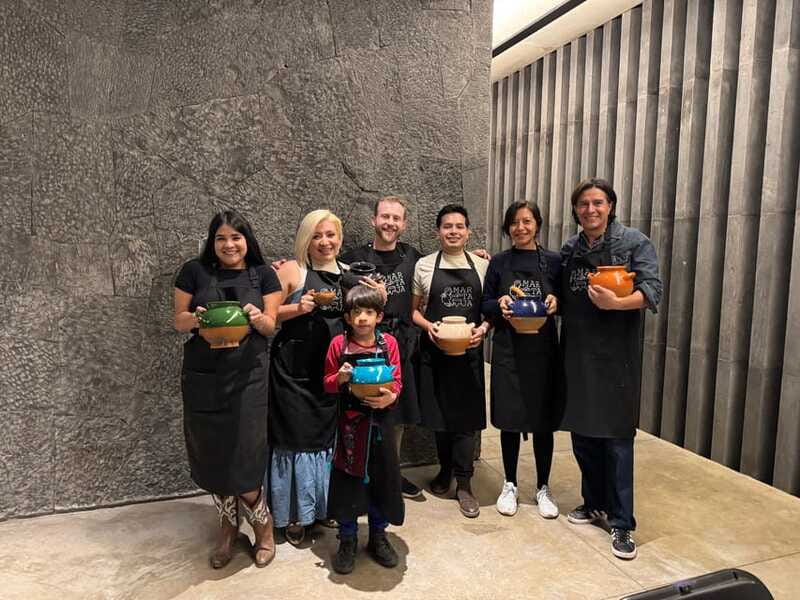
The home setting is part of the experience’s character. Jim and his assistant create a friendly, informal atmosphere, and the class can be arranged as a private or small-group session. A private booking offers more control over who is at your table; a small group may bring a mix of tastes and ideas. The exact size depends on the option available when you book.
The class is offered in English and Spanish. If you have dietary needs, keep an eye on your email after booking, since the host will ask about them and can accommodate most requirements. Strict Kosher needs cannot be met at present, so check that before committing.
A few more Mexico City tours to consider
- Teotihuacan, Guadalupe Shrine & Tlatelolco Day Tour with Lunch
★ 5.0 · 11,603 reviews - Xochimilco, Coyoacan and Frida Kahlo with Optional Lunch
★ 4.5 · 7,320 reviews - Balloon flight + Breakfast in cave + Pyramids + Pick up CDMX.
★ 5.0 · 6,335 reviews - Teotihuacan pyramids morning or afternoon without tourist traps
★ 5.0 · 6,186 reviews
Is $115 a fair price?
At $115 per person, this is not a cheap cup of hot chocolate. You are paying for a three-hour, guided activity with ingredients for six drinks, hands-on work from whole cacao beans, historical context, and dessert. For someone who values food traditions and wants to take part rather than simply watch, that is a meaningful amount of instruction and tasting time.
The value depends on what you want from a cooking class. If you are mainly looking for a snack, the price will feel high. If you want a small-group lesson that combines history, technique, and experimentation, it makes more sense. The class’s strongest assets are the full process, the chance to make your own flavor combinations, and Jim’s ability to connect the food with pre-Columbian ingredients and traditions.
There is one useful price check: the same experience may cost less when booked through the Martaja website. Compare the total price and the details of the option before paying, since the meeting point may vary by option. The booking platform also offers reserve-now, pay-later booking and free cancellation up to 24 hours in advance, which can help if your plans are still settling.
Practical details to check before you book
The class is in a home with two cats. They are kept out of the cooking area, and the host has allergy pills available, but anyone with a serious allergy should weigh that information carefully rather than assume the setting will be suitable. If you have a food allergy or dietary restriction, share it when the host contacts you after booking.
Wheelchair users have enjoyed the class before, but the building does not have an elevator. That is an important distinction: the class has been accessible to some wheelchair users, but there is no lift, so ask about the building and access for your own needs before booking.
Families may find this a particularly good shared activity. Children can take part in roasting, grinding, and flavor experiments, and the host’s food recommendations and local suggestions may be useful during a wider Mexico City visit. Still, it is a three-hour class in a home, so consider whether your children are comfortable with that format and the two cats.
Should you book this cacao workshop?
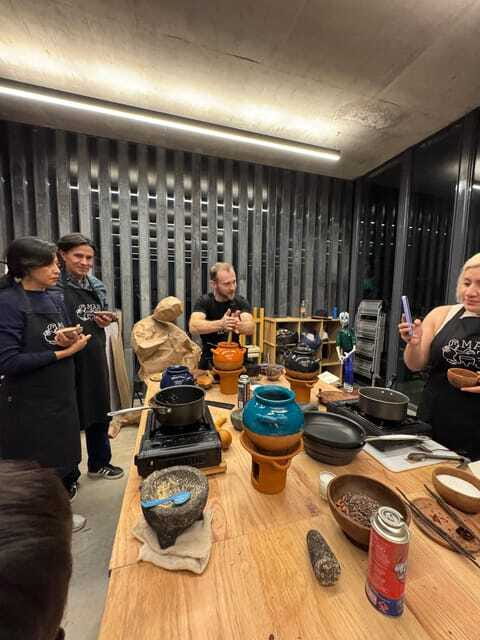
Book it if you want to understand how cacao becomes a drink, enjoy cooking by hand, or are curious about pre-Hispanic food traditions. The mix of history, metate grinding, and six creative hot chocolates makes the class more than a pleasant tasting; you take part in the work that shapes the final flavors.
Think twice if you need a fully step-free building, have a serious cat allergy, require strict Kosher preparation, or only want a quick and inexpensive taste of Mexican chocolate. For everyone else, this is a good use of a half day, especially for families and food-minded visitors who would rather make something than only look at it. Confirm the address, compare booking prices, and arrive ready to experiment.
FAQ
How long is the cacao workshop?
The class lasts three hours. It includes a history introduction, roasting and grinding cacao, preparing six hot chocolate drinks, and dessert.
How much does it cost?
The listed price is $115 per person. The same class may cost less when booked through the Martaja website, so compare prices before you reserve.
Where does the class take place?
The description places the class at a home in Condesa, but the location field says State of Mexico and the meeting point may vary by booking option. Confirm the exact address before you travel.
What languages are available?
The instructor offers the class in English and Spanish.
Can I book a private class?
Private or small-group options are available. Check which option is offered for your chosen date.
Are ingredients and food included?
Yes. Ingredients for six hot chocolate drinks and a dessert to accompany them are included. The host will contact you about dietary requirements, and most can be accommodated, but strict Kosher preparation is not available.
Is the class suitable for someone with mobility or cat allergies?
The building does not have an elevator, although wheelchair users have enjoyed the class before. There are two cats in the home, kept out of the cooking area, and the host has allergy pills available.
New on the list in Mexico City
- Private & Tailor Made Tour to Teotihuacan Pyramids!★ 5.0 · 37 reviews
- Private Tour: Pyramids of Teotihuacan and Piramides of Atlantes de Tula★ 5.0 · 26 reviews
- Xochimilco Tour★ 5.0 · 26 reviews
- Private tour to Queretaro and San Miguel de Allende★ 4.0 · 10 reviews
- Private Street Food & Mural Art Tour in Mexico City★ 3.5 · 3 reviews
- Private tour Antropology Museum Frida Khalo museum and Leon Trotskyi museum★ 5.0 · 3 reviews
- Private Tour: Museum of Anthropology and Chapultepec Castle★ 5.0 · 3 reviews
- Teotihuacan Private Tour, Cave Breakfast and Transportation★ 5.0 · 51 reviews
Mexico City Tours, compared.
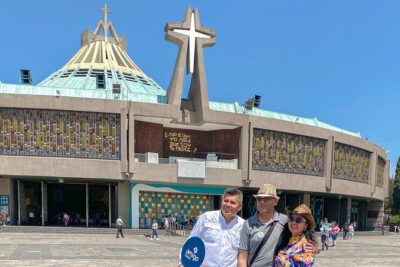
Teotihuacan, Guadalupe Shrine & Tlatelolco Day Tour with Lunch
Read our review →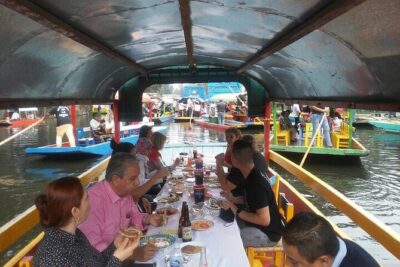
Xochimilco, Coyoacan and Frida Kahlo with Optional Lunch
Read our review →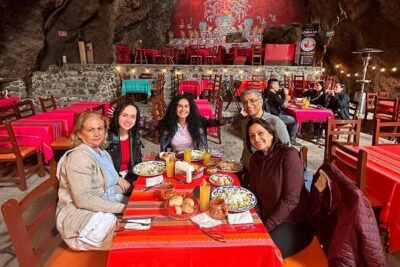
Balloon flight + Breakfast in cave + Pyramids + Pick up CDMX.
Read our review →
Teotihuacan pyramids morning or afternoon without tourist traps
Read our review →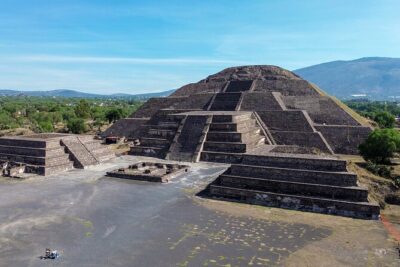
Teotihuacan Early Access Guided Tour with optional Lunch
Read our review →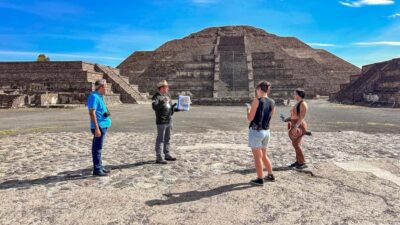
Teotihuacan, Tlatelolco & Guadalupe Shrine Tour
Read our review →
Teotihuacan Hot Air Balloon Flight from Mexico City / Volare
Read our review →