Reviewed · MEXICO CITY TOURS
The hidden archaeology in the CDMX
Mexico City’s old center hides layers of Mexica and colonial history in plain sight. This private walk links archaeological remains and historic buildings to the story of Tenochtitlán, its fall to Spanish conquerors and Indigenous allies, and the city that grew over it.
I like two things here: the guide connects scattered sites into one story, and the route includes places you might pass without realizing their significance. The main caveat is important: all stops are viewed from outside, and the tour has a serious reliability concern after one guest reported waiting an hour for a guide who never arrived.
- A street-level view of archaeology: Look for archaeological traces and windows without planning a series of separate museum visits.
- Eight central stops: The route includes the Zócalo, the former archbishop’s palace, the Templo Mayor area, and the House of Tiles.
- A focused historical story: The walk links Mexica Tenochtitlán with the Spanish conquest and the later city.
- Private for your group: You will not be joined by other groups on the tour.
- About four hours on foot: The listed stop times add up to just under four hours, with the tour ending near Bellas Artes.
- A reliability question to weigh: The overall rating is 4.6 from 10 ratings, but one account describes a no-show and no advance message.
Reading Mexico City’s older layers from the street
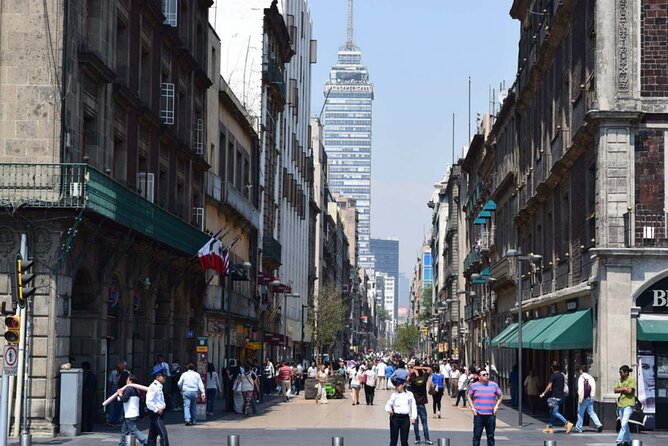
This tour’s appeal is its way of making the historic center feel less like a collection of grand facades and more like a place built over older places. The guide points out archaeological and historical details that can disappear into the noise and motion of the city if you are walking without a specific focus.
The central idea is to imagine Mexico Tenochtitlán, then follow the story of its fall to the Spanish and their Indigenous allies. You are not promised an indoor excavation visit or a full museum tour. Instead, you get an outdoor route that uses visible sites, buildings, and archaeological windows to help frame the city’s past.
That distinction matters when you decide whether the tour suits you. If you want an expert-led introduction before exploring museums on your own, a street-level overview can be a useful starting point. If you expect to enter every named museum or see collections indoors, this is not that experience.
Starting near Izazaga and entering the historic center
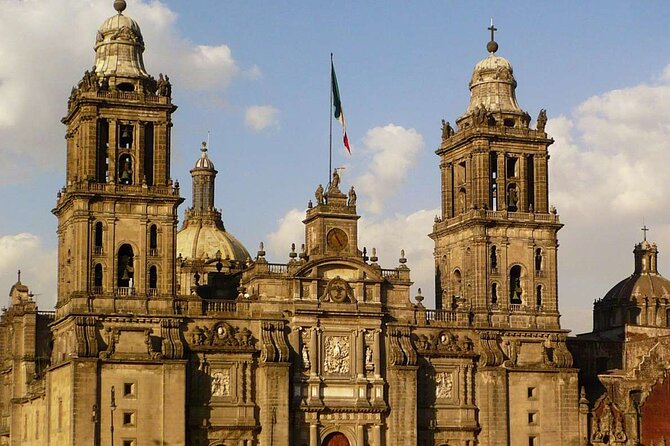
The meeting point is José María Izazaga 129 in the Centro Histórico. From there, the walk visits several places of archaeological and historical interest before reaching the Plaza del Palacio de Bellas Artes, where the tour ends.
The opening stretch is the longest part of the itinerary, listed at 1 hour 50 minutes in the historic center. That gives the guide room to connect several points rather than treating each as an isolated photo stop. The trade-off is that the precise sequence and time spent at each landmark within this section are not specified, so expect a guided walk and explanations rather than a fixed set of indoor visits.
I would arrive ready to walk and to look closely. The tour is designed around details that can be easy to miss amid the city’s traffic and crowds. Its value depends in part on the guide’s ability to help you notice what is there and explain why it matters.
A few more Mexico City tours to consider
- Teotihuacan, Guadalupe Shrine & Tlatelolco Day Tour with Lunch
★ 5.0 · 11,603 reviews - Xochimilco, Coyoacan and Frida Kahlo with Optional Lunch
★ 4.5 · 7,320 reviews - Balloon flight + Breakfast in cave + Pyramids + Pick up CDMX.
★ 5.0 · 6,335 reviews
Hospital de Jesús Nazareno and the story of a historic site
The short stop at Hospital de Jesús Nazareno lasts about 10 minutes. The guide explains the hospital’s history, its relevance, and the sense of magic associated with the site.
A ten-minute visit is an introduction, not a detailed examination of the building. Still, a stop like this can help widen the story beyond temples and conquest. You get a sense of how the historic center’s past is carried not only by archaeological remains, but also by institutions and places with long local importance.
The tour description does not promise entry, and all sites are visited from outside. Treat this as a chance to hear the story and see the site from the street, not as a hospital interior visit.
The Museum of Mexico City, a building with a city inside its story
Next comes the Museo de la Ciudad de México, with about 10 minutes set aside. The building is presented as a place that houses the history of Mexico City, making it a useful bridge between the archaeological past and the city’s later life.
This is a brief exterior stop, not a museum visit. That can be enough to give the route a broader frame: the tour is not only about the Mexica city beneath the modern center, but also about the growth of Mexico City over time.
If the museum itself interests you, plan to return separately for an indoor visit. The tour’s short stop is best understood as context, not as a substitute for exploring the institution.
The Zócalo, the city’s great central stage
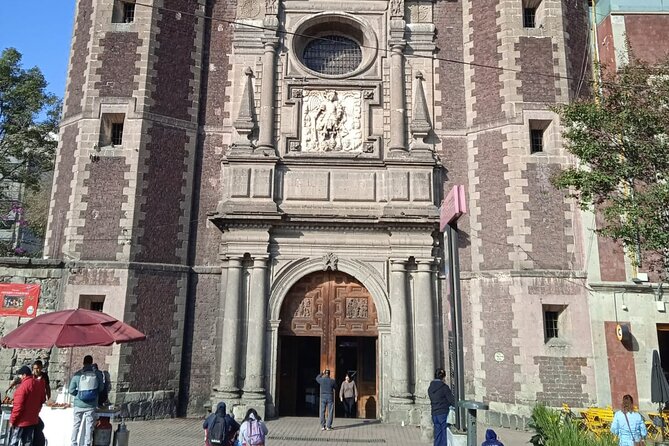
The route allows about 20 minutes at the Zócalo. The guide points out relevant details of this iconic square, one of the tour’s most recognizable places and a natural point for discussing how the city’s layers meet in the same central space.
The Zócalo is not presented as a stand-alone attraction with a long visit. Its role here is interpretive: the guide can help you connect the visible center of Mexico City with the earlier city the tour asks you to imagine. That makes the stop more valuable than a quick look around, especially if you are new to the historic center.
You will be seeing the square from outside as part of the walking route. The schedule does not specify particular monuments or an extended explanation of each, so go in expecting a guided overview rather than a deep survey of every feature.
Swap in a different kind of day:
- Teotihuacan pyramids morning or afternoon without tourist traps
★ 5.0 · 6,186 reviews - Teotihuacan Early Access Guided Tour with optional Lunch
★ 4.5 · 6,138 reviews - Balloon flight + pick up in CDMX + Breakfast in Cave + Pyramids
★ 5.0 · 5,651 reviews - Balloon Flight + Cave Breakfast + Pick Up from CDMX or We Fly
★ 5.0 · 4,410 reviews
Archaeological windows at the former archbishop’s palace
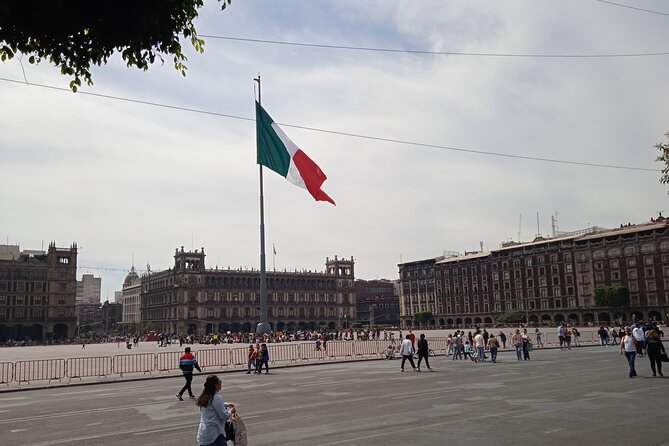
At Museo de Arte SHCP Antiguo Palacio del Arzobispado, the focus is a series of archaeological windows in the area. The stop lasts about 20 minutes, giving the guide a little more time to point out how traces of older structures can appear within the modern city.
This is one of the tour’s most distinctive promises. Archaeological windows make the underlying past visible without requiring you to travel to a separate site, and they suit the tour’s central theme: history is not always set apart behind museum walls.
The limits remain clear. The experience is from outside, and the details of which windows you will see or how they are displayed are not specified. The guide’s explanation is likely to matter more here than the length of the stop.
Templo Mayor and the sacred center of the Mexica
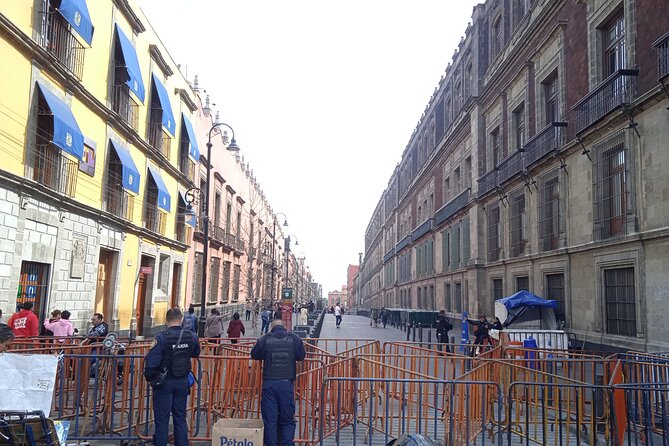
About 30 minutes are set aside for Museo del Templo Mayor. The guide explains how the sacred space of the Aztecs worked and what its structure was like, making this the longest stop after the opening historic-center segment.
This is where the tour’s central story comes into sharpest focus. The Templo Mayor area offers a way to think about the religious and civic shape of Mexica life before the conquest, rather than treating Tenochtitlán as a name from a history book. The guide’s explanation is intended to help you picture the sacred precinct and its organization.
Do not mistake the stop for admission to the museum. The tour specifies that all sites are visited from outside, so you should not expect to enter the museum or explore its exhibits as part of the four-hour walk. If seeing the museum’s collections is a priority, you will need to make time for that separately.
The Mexica elite’s old university at Centro Cultural España
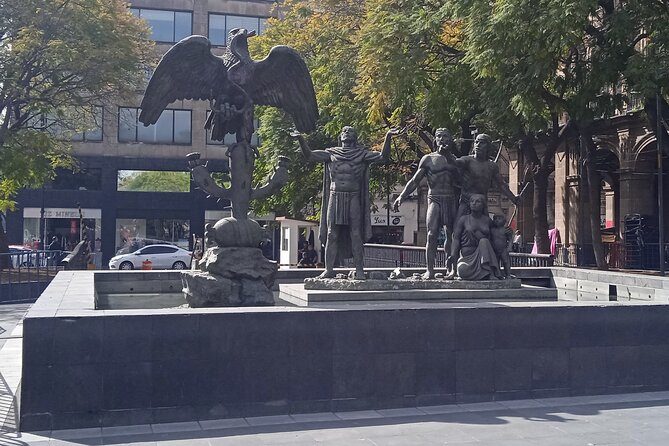
The route then visits Centro Cultural España en México for about 20 minutes. The site is presented as the old university of the Mexica elite, adding an educational and social dimension to a route otherwise centered on archaeology, religious space, and city landmarks.
This stop helps widen the picture of the society that existed before the Spanish conquest. The tour does not provide a detailed outline of what you will see there, but the site’s stated connection to the Mexica elite gives the guide a useful opening to discuss learning and status.
As elsewhere, the visit is from outside. Think of it as a short interpretive pause, not a full visit to the cultural center.
The House of Tiles and the walk toward Bellas Artes
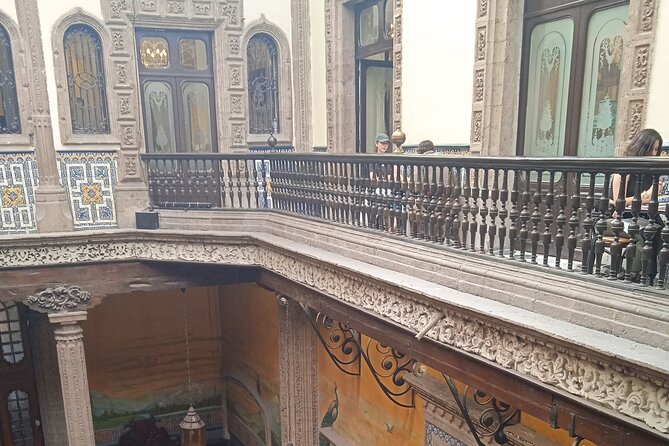
The final named stop is the House of Tiles, with about 15 minutes allocated. It is described as one of the most beautiful houses in the historic center, offering a change of pace after the archaeological and conquest-focused stops.
That contrast is welcome. The route has spent much of its time asking you to look beneath or behind the modern city; here, you get to appreciate a striking historic house as part of the center’s architectural character. The tour then finishes at the Plaza del Palacio de Bellas Artes, a convenient endpoint for continuing your own visit to the area.
The end point is not the same as the starting point. The walk begins near Izazaga and concludes at Bellas Artes, so plan your onward route from there rather than expecting to return to your starting location.
What four hours and $30.49 buy you
At $30.49 per person, the price is reasonable if you value a private guide who can connect several central sites into one account. You are paying for the walking route and interpretation, not for museum access or a series of admission tickets. Since every site is viewed from outside, the cost makes most sense as an orientation to the area and its history.
The tour lasts about four hours. The individual stop times total roughly 3 hours and 55 minutes, close to the stated duration, though the exact pace and walking time between locations are not detailed. You can expect a substantial half-day activity rather than a brief introductory stroll.
It is a private activity, so only your group participates. That can make it easier to keep the focus on your interests than on a large group’s pace, though the tour information does not specify whether the guide can adjust the route or timing. The experience is offered in English and uses a mobile ticket.
The overall rating is 4.6, with 90 percent of participants recommending it, based on 10 ratings. That is encouraging, but the small number means I would not treat the figure as a guarantee. More important for planning is the reported no-show: one guest said the guide did not appear, sent no cancellation message, and left them waiting for an hour. The guide apologized and explained that a family medical problem had caused the absence, while also acknowledging that the tour had been forgotten.
That account points to a genuine reliability risk, even though it is one report. If you book, keep the meeting details handy and allow yourself a way to contact the operator if the guide is late. The supplied information does not name the guide or provide a contact method, so check those details in your booking confirmation rather than assuming them.
Who will get the most from this walk
I would choose this tour if you want a guided introduction to the historic center and are especially interested in how Mexico City’s present streets overlap with the Mexica past. It is also a good fit if you prefer a private group and want a guide to connect sites that might otherwise feel unrelated.
It is less suitable if you are counting on museum entry, want a long visit at any one location, or need a tour built around a baby. The activity is specifically not recommended for people with babies, so families with infants should look for another option.
The tour’s strongest feature is its theme, not any single attraction. You move from archaeological traces to hospitals, civic buildings, the Zócalo, a sacred center, a site tied to the Mexica elite, and a historic house. That variety gives the guide room to sketch a bigger picture, while the outside-only format keeps the experience firmly on the streets.
Should you book the hidden archaeology walk?
Book it if you want a compact, private, English-language route that connects the archaeological past with central Mexico City’s historic places. The price is fair for a four-hour guided walk, particularly if you value the guide’s context more than museum interiors.
Skip it if indoor access is essential, if you want a slower visit to the museums, or if the no-show report makes you uncomfortable with the reliability risk. Before confirming, check the meeting point and the operator’s contact details. For the right visitor, this is a practical way to give the historic center a clearer story, as long as you go in knowing that the sites are viewed from outside.
FAQ
How long does the tour last?
It lasts about four hours. The listed times for the stops add up to roughly 3 hours and 55 minutes.
Where does the tour start and end?
It starts at José María Izazaga 129 in the Centro Histórico. It ends at the Plaza del Palacio de Bellas Artes.
Is the tour private?
Yes. Only your group participates.
Is the tour offered in English?
Yes, English is an offered language.
Do you enter the museums and other sites?
No. All sites are visited from outside, so the tour does not include indoor visits.
Is the tour recommended for people with babies?
No. It is not recommended for people with babies, and the supplied information says it is preferable not to bring babies.
New on the list in Mexico City
- Private & Tailor Made Tour to Teotihuacan Pyramids!★ 5.0 · 37 reviews
- Private Tour: Pyramids of Teotihuacan and Piramides of Atlantes de Tula★ 5.0 · 26 reviews
- Xochimilco Tour★ 5.0 · 26 reviews
- Private tour to Queretaro and San Miguel de Allende★ 4.0 · 10 reviews
- Private Street Food & Mural Art Tour in Mexico City★ 3.5 · 3 reviews
- Private tour Antropology Museum Frida Khalo museum and Leon Trotskyi museum★ 5.0 · 3 reviews
- Private Tour: Museum of Anthropology and Chapultepec Castle★ 5.0 · 3 reviews
- Teotihuacan Private Tour, Cave Breakfast and Transportation★ 5.0 · 51 reviews
Mexico City Tours, compared.
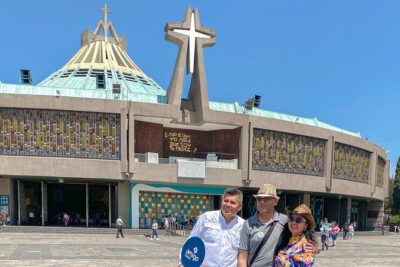
Teotihuacan, Guadalupe Shrine & Tlatelolco Day Tour with Lunch
Read our review →
Xochimilco, Coyoacan and Frida Kahlo with Optional Lunch
Read our review →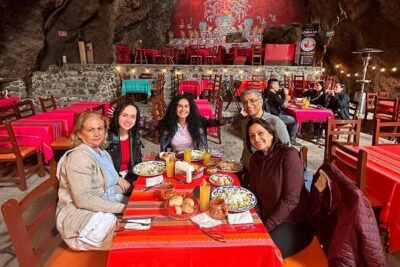
Balloon flight + Breakfast in cave + Pyramids + Pick up CDMX.
Read our review →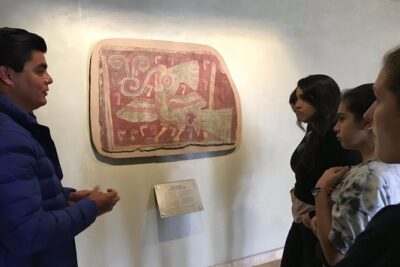
Teotihuacan pyramids morning or afternoon without tourist traps
Read our review →
Teotihuacan Early Access Guided Tour with optional Lunch
Read our review →
Teotihuacan, Tlatelolco & Guadalupe Shrine Tour
Read our review →
Teotihuacan Hot Air Balloon Flight from Mexico City / Volare
Read our review →