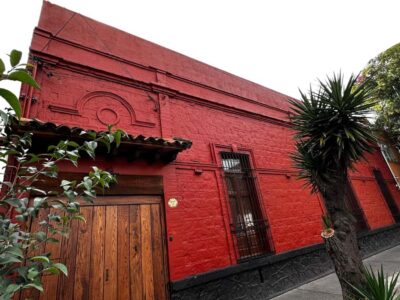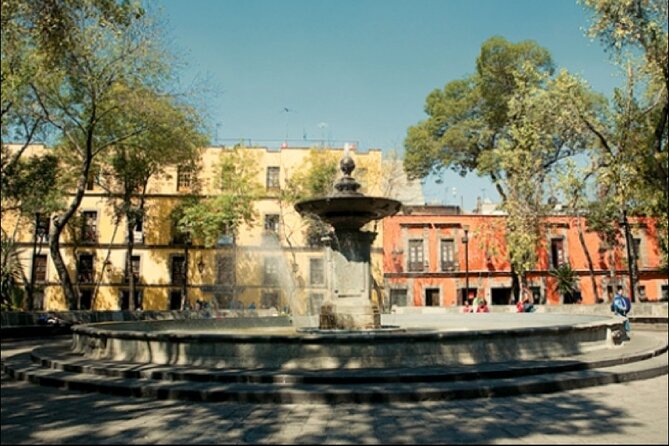
Reviewed · MEXICO CITY TOURS
Arrivals & Survival of Jews in Mexico from 1519
Mexico City’s Jewish story is written into streets better known for Aztec ruins, colonial churches and the old Inquisition. This walk links those places to the arrival and survival of Jewish communities, ending at the first Ashkenazi synagogue in Mexico.
I like the opening conversation on the terrace overlooking the Great Aztec Temple, which sets up a useful contrast between the city’s religious past and its present-day coexistence. I also like the small group, capped at 10, and the route’s unusual mix of historic sites, including the former Inquisition district and two early synagogues.
One consideration: this is a broad history walk, not a synagogue tour alone. The guide connects Jewish history to Mexico’s wider religious and political story, so you may want to ask questions if you’re hoping for more detail on a particular period.
Key points before you book
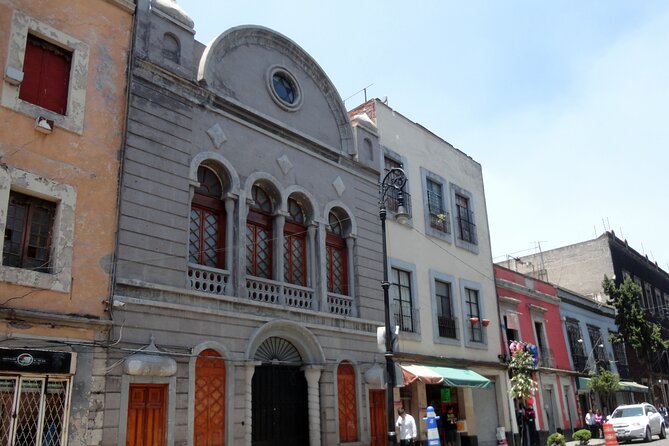
- The route ends at two important synagogues: See the sites of Sephardic Mount Sinai and Nidjei Israel, then visit the decommissioned Justo Sierra Synagogue.
- The Inquisition district is central to the story: The walk examines the former Palace of the Inquisition, its prison and nearby religious architecture.
- The first stop is a seated introduction: The group meets at Librería Porrúa for a conversation overlooking the Great Aztec Temple.
- You’ll also hear about Mexican history beyond Jewish life: The route includes Diego Rivera, Frida Kahlo, Leon Trotsky and the country’s anti-Fascist movement.
- Plan for a half-day and moderate walking: The tour lasts about three and a half hours, with short stops and walks through the Centro Histórico.
- The guide can shape the experience: Carlos is named often, and the group size allows time for questions. The scheduled guide may vary.
A Jewish history walk through Mexico’s old center
Arrivals & Survival of Jews in Mexico from 1519 is a guided walk through the Centro Histórico, focused on how Jewish people arrived, lived and found ways to endure in Mexico. The subject reaches back to the Spanish conquest and Inquisition, but the route also connects that history to the city’s present-day religious life.
The tour costs $99 per person and lasts about three and a half hours. That is a meaningful price for a walking tour, so the value depends on what you want from your morning. If you’re interested in Jewish history, colonial Mexico and the way the two intersect, the guide’s explanations and access to places agreed for the tour can make the cost worthwhile. If you want a brief overview or a walk focused only on synagogues, you may find the scope too broad.
The group is limited to 10 people, which matters on a topic that invites questions and discussion. The tour is offered in English, starts at 10:00 am and finishes on Justo Sierra Street, near Loreto Park. Expect to walk between stops; the stated fitness level is moderate.
A few more Mexico City tours to consider
- Teotihuacan, Guadalupe Shrine & Tlatelolco Day Tour with Lunch
★ 5.0 · 11,603 reviews - Xochimilco, Coyoacan and Frida Kahlo with Optional Lunch
★ 4.5 · 7,320 reviews - Balloon flight + Breakfast in cave + Pyramids + Pick up CDMX.
★ 5.0 · 6,335 reviews
Librería Porrúa: a view that sets the scene
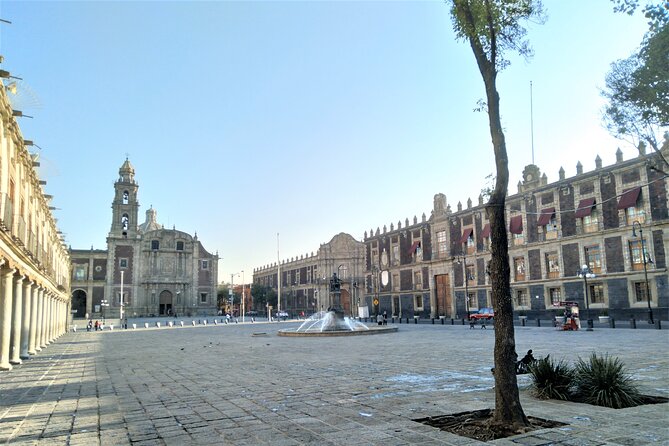
The meeting point is Librería Porrúa, at República de Argentina 15. The tour begins with an introductory conversation from a terrace overlooking the ruins of the Great Aztec Temple. It’s a fitting place to start: before turning to Jewish history, the guide places Mexico City’s religious past beside the coexistence visible in the city today.
One participant described having coffee and a snack during this opening conversation. That may be a pleasant way to settle in, but food or drink is not included in the stated tour price, so treat it as an optional extra rather than part of the package.
The first stop is scheduled for an hour, the longest of the tour. That time gives the guide room to lay out the broader history before the group moves into the streets. If you prefer to begin with a clear timeline rather than a string of dates at each landmark, this opening should suit you.
Behind the Metropolitan Cathedral: faith and colonial power
From the bookstore, the walk goes behind the Metropolitan Cathedral to the Chapel of the Souls. Here, the guide discusses teachings against heresy and the ways colonial architecture and religious authority shaped life for people outside the Catholic faith.
The tour presents the cathedral area as a place where religious design and control intersected, including the claim that parts of the colonial layout were intended to keep Jews away. That is a strong interpretation, so listen for the explanation behind it and ask how the guide supports the connection. The stop is brief, about 20 minutes, and the value is less in entering a building than in learning how to read the setting.
This is one reason the walk can appeal even if you already know the main sights of the historic center. Familiar buildings take on another meaning when the guide connects them to questions of exclusion, belief and public life.
Plaza de Santo Domingo: traders under watch
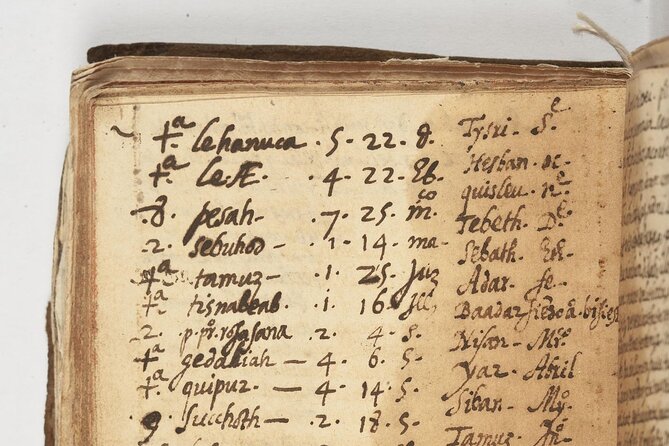
At Plaza de Santo Domingo, the guide turns to the historic marketplace, where traders worked from the 16th through the 19th centuries. The story focuses on Jews living in hiding, who had to bring goods to market while under watch from the Palace of the Inquisition.
The group also examines what the guide describes as anti-Semitic messages in the palace and the Santo Domingo church. The church is linked to El Camino Real, a route presented as a safe haven for Jewish traveling traders. This stop joins everyday commerce to the risks faced by people trying to maintain a livelihood while concealing their identity.
You’ll spend about 20 minutes here. The details are largely delivered through the guide’s account, so this is a good place to ask for context if you want to distinguish documented history from the guide’s interpretation of symbols and architecture.
Swap in a different kind of day:
- Teotihuacan pyramids morning or afternoon without tourist traps
★ 5.0 · 6,186 reviews - Teotihuacan Early Access Guided Tour with optional Lunch
★ 4.5 · 6,138 reviews - Balloon flight + pick up in CDMX + Breakfast in Cave + Pyramids
★ 5.0 · 5,651 reviews - Balloon Flight + Cave Breakfast + Pick Up from CDMX or We Fly
★ 5.0 · 4,410 reviews
The Inquisition buildings and the Perpetual Prison
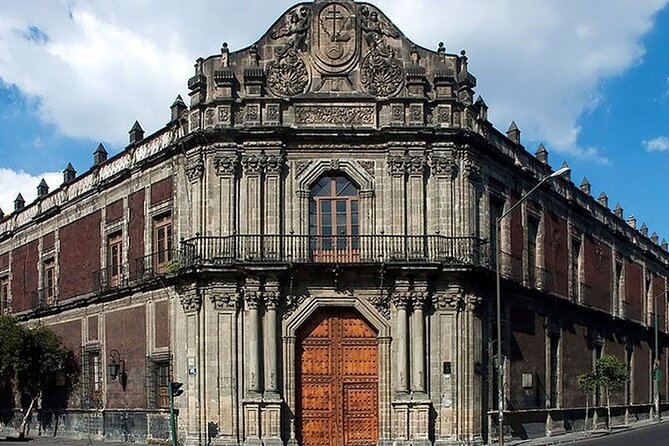
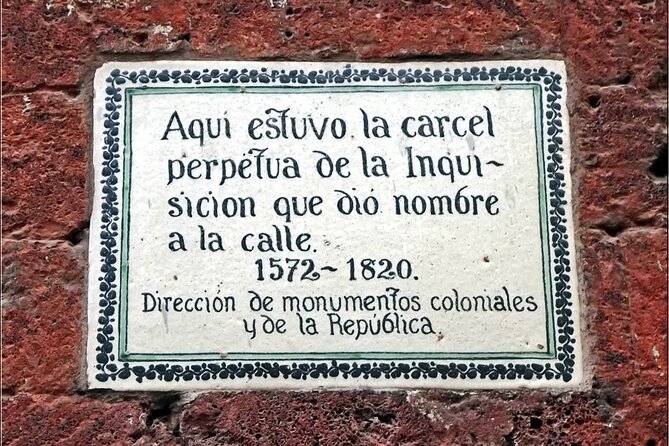
The route passes the former administration building of the Inquisition, its living quarters and the site of its Perpetual Prison. The guide discusses how Jews were tortured and sentenced to death there, bringing the tour’s account of persecution into sharp focus.
The stop is scheduled for about 20 minutes. You won’t be touring a museum interior as part of the stated plan, but the buildings and their locations help make the history tangible. The subject is grim, and the brisk pace may leave you wanting more time for questions. If this period is especially important to you, tell the guide early so you can use the walk to ask for further detail.
San Ildefonso: Rivera, Kahlo and political refuge
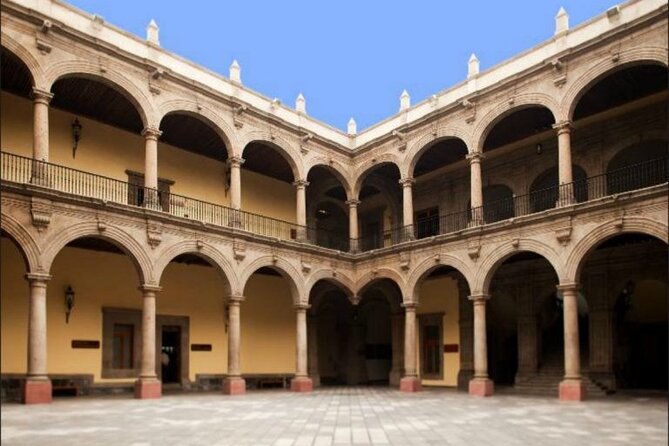
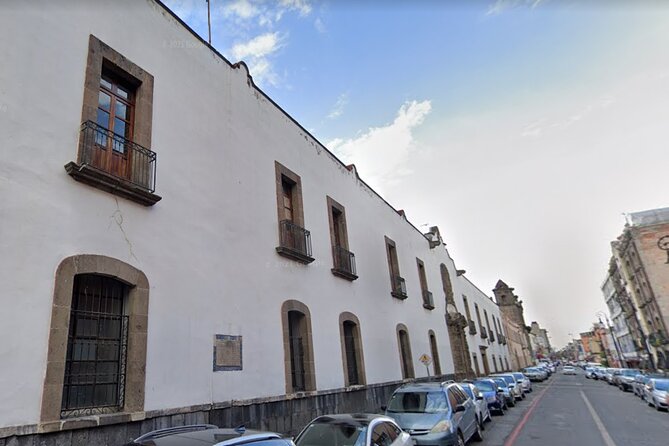
At the former Colegio de San Ildefonso, the group sees the building from outside. The guide discusses where Diego Rivera, described on the tour as having Sephardic roots, met Frida Kahlo, whose family background is described as Ashkenazi.
The conversation then widens to Mexico’s anti-Fascist movement, the cancellation of the country’s first and only anti-Semitic national convention, and the reception of Leon Trotsky as a refugee. The connection gives the tour a modern political thread: Jewish history here is not only about the Inquisition, but also about the ways Mexico responded to antisemitism and displacement in a later era.
This is a short stop, about 15 minutes, and you’ll view the site from outside. It is most rewarding if you enjoy seeing how individual lives and national politics meet. The guide’s account may also raise questions about ancestry and historical interpretation, so ask for sources or clarification if you want to explore those claims further.
Plaza Loreto and the first synagogues
Near the end of the walk, Plaza Loreto brings the focus back to Jewish communal life. The route passes Sephardic Mount Sinai, described as Mexico’s first purpose-built synagogue, and neighboring Nidjei Israel, identified as the first Ashkenazi synagogue in the country.
The group then visits the decommissioned Justo Sierra Synagogue, the first Ashkenazi synagogue in Mexico. This is the tour’s clearest encounter with Jewish religious architecture, and for many people it will be the most anticipated part. The synagogues offer a concrete counterpart to the earlier stops, which dealt more with restrictions, concealment and the Inquisition.
The Plaza Loreto stop is listed at about 15 minutes, followed by roughly 20 minutes at Justo Sierra. The tour ends at Justo Sierra 71, on the south side of the street, in front of Loreto Park. Since the synagogue is decommissioned, don’t assume the visit is to an active congregation or that you’ll see every part of the building. The agreed access is part of what makes this route distinctive, but the exact experience can depend on the arrangements for your date.
What the guide adds to the walk
The guide is central to this experience. Carlos is frequently named, and the strongest praise centers on his clear storytelling, command of Mexican and Jewish history, friendly manner and willingness to answer questions. Several people describe the tour as personal and interactive, rather than a string of dates delivered at each stop.
The guide’s approach also shapes how much of the three-and-a-half hours is devoted specifically to Jewish history. The route covers colonial religion, Mexican history, art and politics alongside Jewish life. One person felt that the Jewish portion was shorter than expected, while others valued the wider context. If you’re booking for a particular topic, say so at the start and ask the guide to make room for it.
Carlos is not guaranteed by the details provided, so ask who is leading your date if his particular style is important to you. The tour has a maximum of 10 people, a useful size for asking follow-up questions without needing to compete with a crowd.
Is $99 good value?
At $99, this costs more than a basic city walk. You’re paying for a specialist subject, an English-speaking local guide, a small group and access to some public and private places arranged for the tour. The experience is strongest when you treat it as an interpretive history walk, not simply a route between buildings.
The opening talk, extended first stop and broad historical context take up a substantial part of the morning. That can be a plus if you like hearing how the city’s religious and political history fits together. It may feel less worthwhile if you expect several long synagogue visits or a detailed account of Jewish life at every stop.
The tour runs about three and a half hours, though the stops listed add up to less than that; walking and transitions account for part of the time. There is no admission charge listed for the stops, but access to some public and private places has been agreed or included. The value is therefore mostly in the guide’s explanations, the carefully chosen route and the opportunity to see sites you might otherwise pass without knowing their significance.
Practical details for your morning
Meet at Librería Porrúa, República de Argentina 15, Centro Histórico, at 10:00 am. The tour ends at Justo Sierra 71, near Loreto Park. Both points are in the historic center, and the meeting area is near public transportation.
Wear comfortable walking shoes and be ready for a moderate amount of walking. The tour moves between several stops, but the route includes seated time at the opening and short visits along the way. Service animals are allowed.
The tour is commonly booked about 30 days in advance, so leave time to reserve if you have a fixed travel schedule. Free cancellation is available if you cancel at least 24 hours before the start; changes or cancellations inside that window are not accepted under the stated terms. A small number of past departures have been cancelled, including for health or safety reasons. Keep your contact details current and check messages before setting out.
Who should book this tour?
I’d choose this walk if you want a focused way to connect Jewish history with the places and politics of Mexico City’s old center. It suits people with an interest in Jewish heritage, the Spanish Inquisition, colonial history or the city’s cultural life, and it can work well for families with older children who enjoy asking questions. One family with high-school-age daughters found the mix of history and landmarks a good fit.
I’d think twice if you want a tour devoted almost entirely to synagogue interiors, or if you prefer a quick, light overview. The subject includes persecution and torture, and the guide may present specific interpretations of architecture and historical symbols. If you’re comfortable engaging with that material and asking for context, the walk offers a thoughtful alternative to a standard Centro Histórico route.
FAQ
How long is the tour?
It lasts approximately three hours and 30 minutes. The listed stop times total less than that, with the remaining time used for walking and transitions.
What time and where does the tour start?
It starts at 10:00 am at Librería Porrúa, República de Argentina 15, in the Centro Histórico.
Where does the tour end?
It ends at Justo Sierra 71, in front of Loreto Park on the south side of Justo Sierra Street.
Is the tour offered in English?
Yes. English is the offered language.
How large is the group?
The tour has a maximum of 10 participants.
Which synagogues are included?
The route passes Sephardic Mount Sinai and Nidjei Israel at Plaza Loreto, then visits the decommissioned Justo Sierra Synagogue.
Is admission included?
Admission to some public and private places has been agreed and is either waived or included. The stops with listed admission tickets are marked as free.
New on the list in Mexico City
- Private & Tailor Made Tour to Teotihuacan Pyramids!★ 5.0 · 37 reviews
- Private Tour: Pyramids of Teotihuacan and Piramides of Atlantes de Tula★ 5.0 · 26 reviews
- Xochimilco Tour★ 5.0 · 26 reviews
- Private tour to Queretaro and San Miguel de Allende★ 4.0 · 10 reviews
- Private Street Food & Mural Art Tour in Mexico City★ 3.5 · 3 reviews
- Private tour Antropology Museum Frida Khalo museum and Leon Trotskyi museum★ 5.0 · 3 reviews
- Private Tour: Museum of Anthropology and Chapultepec Castle★ 5.0 · 3 reviews
- Teotihuacan Private Tour, Cave Breakfast and Transportation★ 5.0 · 51 reviews
Mexico City Tours, compared.
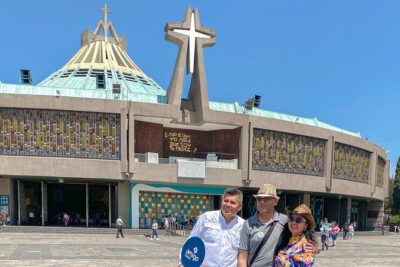
Teotihuacan, Guadalupe Shrine & Tlatelolco Day Tour with Lunch
Read our review →
Xochimilco, Coyoacan and Frida Kahlo with Optional Lunch
Read our review →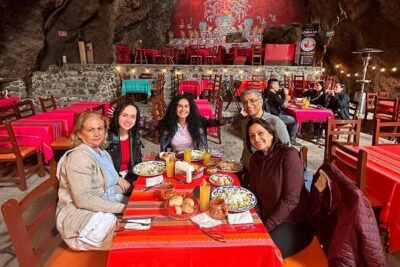
Balloon flight + Breakfast in cave + Pyramids + Pick up CDMX.
Read our review →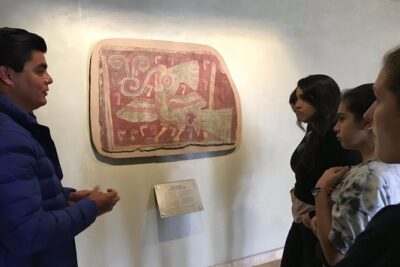
Teotihuacan pyramids morning or afternoon without tourist traps
Read our review →
Teotihuacan Early Access Guided Tour with optional Lunch
Read our review →
Teotihuacan, Tlatelolco & Guadalupe Shrine Tour
Read our review →
Teotihuacan Hot Air Balloon Flight from Mexico City / Volare
Read our review →