
Reviewed · MEXICO CITY WALKING TOURS
Colonia Roma Musical Walking Tour
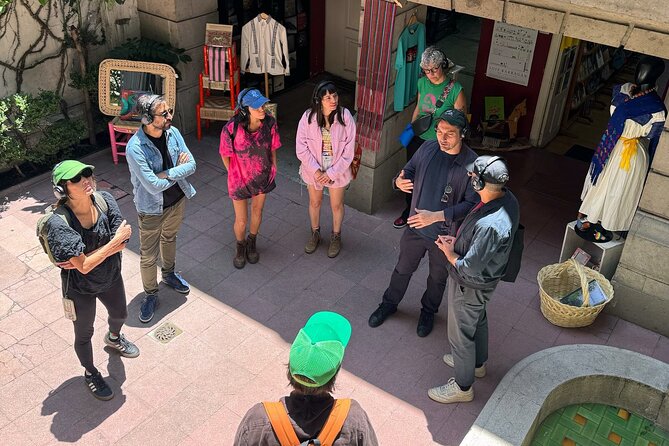
Colonia Roma’s story can be read in its chapels, apartment houses, plazas and tortilla shops. This 2-hour-15-minute walk connects those everyday places to larger Mexican histories, including the Revolution, the growth of Mexico City and the early story of tortillas.
I like the mix of big historical ideas and ordinary neighborhood stops, and the way the tour links subjects that might seem unrelated, such as corridos, newspaper stands and tortilla-making. I also like that the route stays in Roma rather than rushing between distant sights.
One consideration: this is a walking tour built around explanations and discussion, not a string of grand interiors. Some stops last only five to ten minutes, and the value depends on your interest in history, architecture and social context.
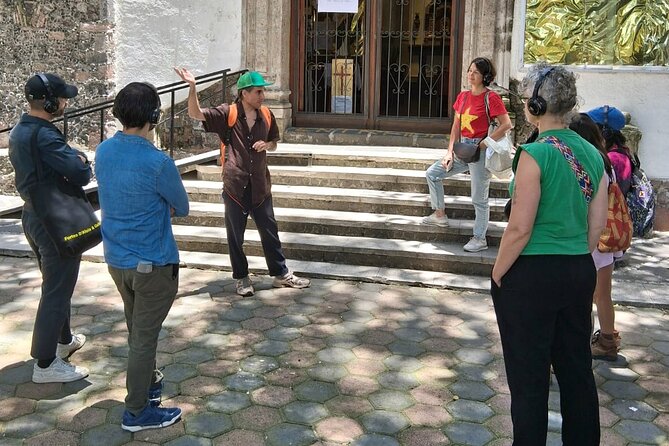
- Start at a 16th-century chapel: Meet at Capilla de San Francisco Javier de la Romita, a reminder that Roma’s story reaches back well before the neighborhood’s 1902 plan.
- Follow 11 locations through Roma: The route takes in historic buildings, plazas and ordinary local businesses.
- Connect culture with daily life: Hear about corridos and crime press, the tortilla’s origins, and the changing needs of a growing city.
- See architecture as a record of change: Compare a grand house, an eclectic apartment building and plazas shaped by shifting neighborhood needs.
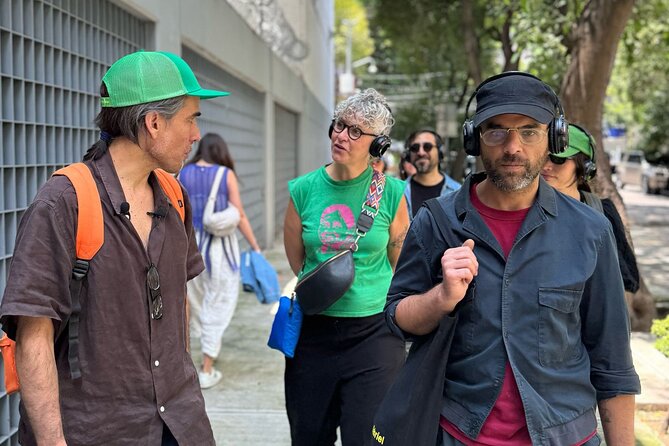
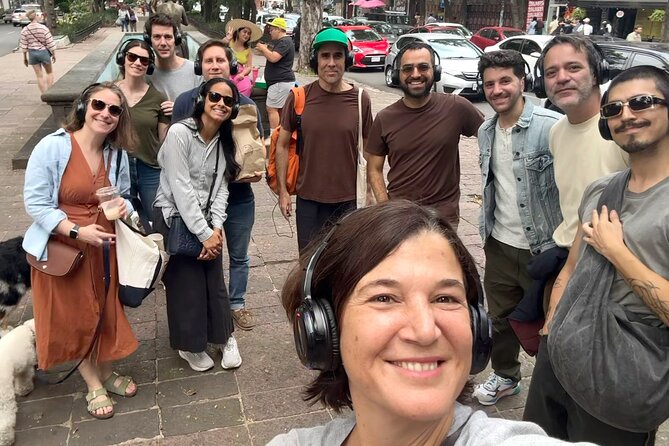
- Keep the group small: The maximum is 12, with the tour offered in English.
- Finish at Plaza Rio de Janeiro: The endpoint is one of the neighborhood’s main plazas, included in its first plan in 1902.
Colonia Roma, read block by block
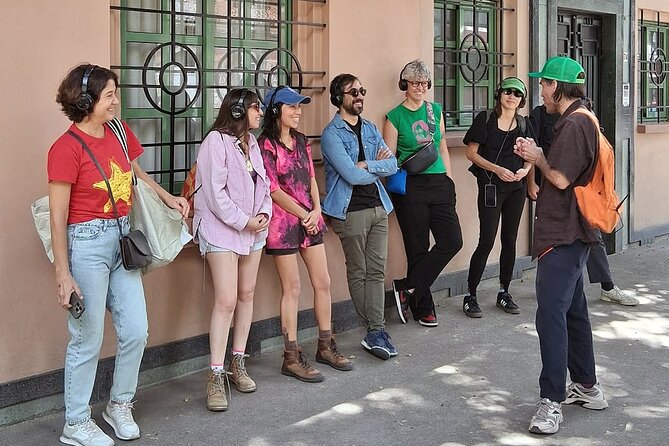
This tour treats Roma as more than a collection of pretty façades. Its route links 11 locations to questions about Mexican identity, urban growth, architecture and culture. You move through one neighborhood, but the subjects stretch across centuries, from the Zapotec world to modern Mexico City.
That approach suits you if you like understanding why a place looks and works as it does. Rather than focus only on famous buildings, the walk includes less obvious stops that can reveal how residents lived, what services the neighborhood needed and how the city changed around it.
The tour is offered by Gabriel Acevedo Velarde and is conducted in English. The small-group limit of 12 should make it easier to hear explanations and ask questions than on a large group walk, though the experience still depends on how much you enjoy listening and discussing ideas while on foot.
Beginning at Romita’s 16th-century chapel
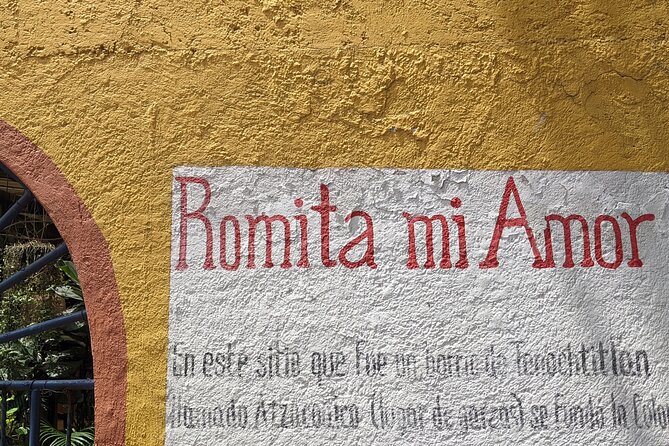
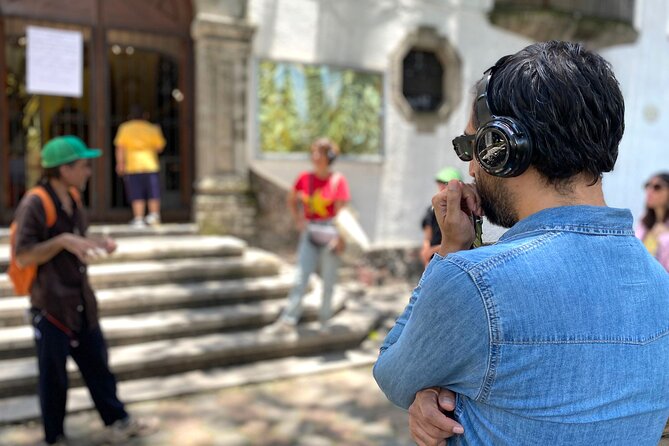
The meeting point is Capilla de San Francisco Javier de la Romita, at Pl. Romita 30. It is an unusually early marker in a neighborhood more often associated with the turn of the 20th century. A tiny town grew around the chapel and kept its identity until the 20th century, giving the opening stop a useful sense of how old settlements were absorbed into a much larger city.
The chapel is also where the tour discusses the origins of the Virgin of Guadalupe. That subject gives the opening a cultural and religious dimension, while the small scale of the place helps make the contrast between old Romita and modern Mexico City tangible.
Allow about 10 minutes here. This is a short introduction, not a long visit inside a major church, so think of it as a starting point for the tour’s themes. You’ll get more from it if you arrive ready to hear how local history connects with wider Mexican identity.
More walking tours around Mexico City:
- Historic Downtown Walking Tour
★ 5.0 · 1,289 reviews - Mexico City: Historic Downtown Walking Tour
★ 4.8 · 1,039 reviews - Frida Kahlo VIP [Museum Tickets Included] Walk, Markets & Churros
★ 5.0 · 982 reviews
Everyday objects and an ambitious house
The route also includes an amusing museum of objects from everyday life in modern Mexico. Its appeal is likely to be in the familiar details: things that once belonged to ordinary routines can show how habits and tastes changed over time. The museum is not identified by name, so you should not plan around a particular collection or expect a set amount of time there.
Another stop is a house associated with the Lamm family, who never actually lived in it. The building is useful for what it says about space and aspiration. When it was built, Mexico City faced an acute housing shortage, yet the house reflects a confident approach to space.
That contrast makes the stop more than an architecture lesson. It puts a grand domestic building beside the needs of a city under pressure to house a rapidly growing population. You’ll see how the tour uses buildings as evidence of social choices, not simply as backdrops for photographs.
Corridos, crime press and Avenida Álvaro Obregón
Avenida Álvaro Obregón is one of Roma’s most recognizable roads and a natural place to pause. The tour uses it to explore the relationship between corridos, a narrative musical genre, and crime press during the Mexican Revolution.
This is one of the walk’s more unusual connections. Corridos tell stories in song, while crime reporting put stories of violence and public life into print. Hearing about both in the setting of a major neighborhood avenue can help you think about how news, music and popular culture carried accounts of turbulent times.
The stop is brief, about eight minutes, so it is best understood as a focused discussion rather than a full account of the Revolution. If you enjoy cultural history and the ways ordinary people learn about events, this should be one of the more engaging pauses.
Plaza Luis Cabrera and the housing question
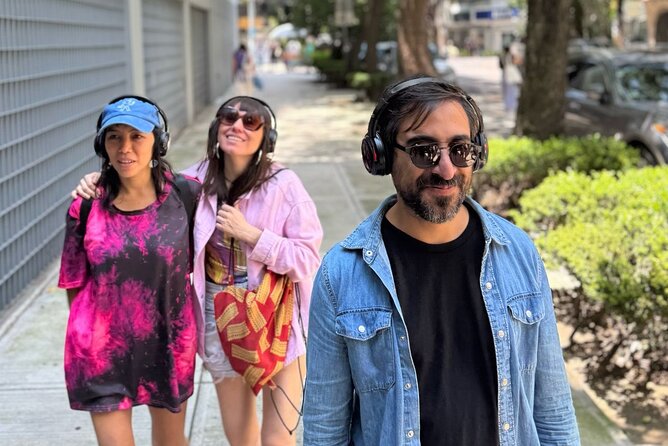
At Plaza Luis Cabrera, the conversation shifts to a 1933 debate between conservative and modernist architects. The argument points to two pressures that were not always easy to reconcile: grand ideas about what the city could become and the urgent need to build housing.
Mexico City was doubling its inhabitants every decade, a pace that made the question of housing more than an abstract design problem. The plaza gives the tour a place to consider what architects and planners hoped to create, and what residents needed in practical terms.
You’ll spend around 10 minutes here. The value is in the context, not in a long list of architectural details. If you like looking at city spaces and asking who they were designed for, this stop gives you a way to read the neighborhood beyond its appearance.
A few more Mexico City tours to consider
- Teotihuacan, Guadalupe Shrine & Tlatelolco Day Tour with Lunch
★ 5.0 · 11,603 reviews - Xochimilco, Coyoacan and Frida Kahlo with Optional Lunch
★ 4.5 · 7,320 reviews - Balloon flight + Breakfast in cave + Pyramids + Pick up CDMX.
★ 5.0 · 6,335 reviews - Teotihuacan pyramids morning or afternoon without tourist traps
★ 5.0 · 6,186 reviews
Plaza Rio de Janeiro and Roma’s changing purpose
Roma was conceived as an exclusively residential district, but planners and owners soon found that a neighborhood could not function well without basic services. Plaza Rio de Janeiro reflects the shift toward a more self-sufficient local area.
That change matters because it shows how a planned neighborhood can evolve once people actually live in it. Shops, services and public spaces help meet daily needs. The tour’s broader point is that Roma did not remain a fixed idea on a map; it changed as the city and its residents changed.
The plaza is also the tour’s endpoint. It was present in the neighborhood’s first plan in 1902 and is described as its main plaza. Finishing here gives the route a neat bookend: you begin in the older settlement of Romita and end in a central space associated with Roma’s planned beginnings.
La Casa de Las Brujas and the city beyond the home
La Casa de Las Brujas, or the Witches’ House, is an apartment building originally built as a hotel. Its eclectic architecture makes it an easy building to remember, but the tour’s interest goes further than its appearance.
The building helps illustrate Roma’s change from an exclusively residential district into a neighborhood that also served the rest of the city. A hotel and apartments speak to different uses of urban space, and the shift reflects how Roma’s role expanded beyond housing.
The stop lasts about five minutes, so expect a concise look at the building and its place in the neighborhood’s development. It is a good example of the tour’s method: a striking façade opens a discussion about how a district works.
Tortillas, Zapotec history and the everyday street
Near Tortillería Premier, a typical tortilla shop, the tour turns to the history of tortillas. The discussion makes a striking connection between their original creation and the first Zapotec state, five centuries BC.
That link may sound surprising, and it is precisely the sort of detail that can make a familiar food feel newly worth thinking about. Tortillas are part of daily life in Mexico, but their history reaches much further back than the modern city around you. The stop asks you to see a local shop not only as a place to buy food, but also as a point of entry into a much older cultural story.
The tour also brings together ordinary venues such as tortilla makers and newspaper stands with history, art and social and political context. That is its strongest idea: Roma’s past is not confined to monuments. You can find clues in the places people use every day.
What the $41.63 price buys
At $41.63 per person, this is not a ticket to a major museum or a collection of paid attractions. The listed stops are free to enter, so the main value is the guide’s interpretation and the connections made across the neighborhood.
The walk lasts about 2 hours and 15 minutes, long enough to build a picture of Roma without taking up a full day. The route’s 11 locations offer variety, from the chapel and plazas to a museum, a house and a tortilla shop. If you prefer to explore at your own pace or mainly want time for photos, the price may feel high for a walking route. If you value a guided account that links buildings and daily life to Mexican history, it is easier to justify.
The maximum group size is 12, which is a useful limit for a tour built around conversation. It also keeps the experience from feeling like a large procession through the neighborhood. The tour is near public transportation, and most people can participate; service animals are allowed.
Who will get the most from this walk
I’d choose this tour if you have already seen some of Mexico City’s best-known sights and want a more local way to understand Roma. It should also suit anyone interested in architecture, urban planning, Mexican cultural history or the links between popular culture and politics.
The route is especially appealing if you like unexpected connections. Corridos and crime reporting, an old chapel and the Virgin of Guadalupe, or tortillas and the first Zapotec state are not standard neighborhood-tour pairings. The guide’s approach, as reflected in the tour’s themes, is to connect subjects that might otherwise seem unrelated.
You may prefer a different activity if you want extensive time inside buildings, a food tasting, or a leisurely café stop. None of those is specified as part of the experience. The focus is on walking and interpretation, with short pauses at several sites.
The start time is 10:30 a.m. at Capilla de San Francisco Javier de la Romita, and the tour ends at Plaza Rio de Janeiro. Leave enough time to reach the chapel and check the exact meeting point before setting out. The experience requires good weather; if poor weather leads to cancellation, you can choose another date or receive a full refund. You can cancel for a full refund up to 24 hours before the start time.
Should you book the Colonia Roma Musical Walking Tour?
Book it if you want a compact, thoughtful walk that explains how Roma’s buildings, streets and ordinary businesses reflect Mexico City’s changing identity. The combination of architecture, social history and cultural references is more distinctive than a tour that simply points out attractive façades.
Skip it if you want a food-focused outing, long visits inside attractions or a route centered on the city’s major landmarks. For curious walkers who like connecting daily life with bigger historical stories, the 11-stop format and small group make this a worthwhile way to spend a morning.
FAQ
How long is the Colonia Roma Musical Walking Tour?
The tour lasts approximately 2 hours and 15 minutes.
Where does the tour start and finish?
It starts at Capilla de San Francisco Javier de la Romita, at Pl. Romita 30, and ends at Plaza Rio de Janeiro.
What time does the tour start?
The stated start time is 10:30 a.m.
Is the tour offered in English?
Yes. English is the listed tour language.
How many people can join the group?
The maximum group size is 12 travelers.
Can I cancel if the weather is poor or my plans change?
You can cancel up to 24 hours before the start for a full refund. If poor weather causes the tour to be canceled, you’ll be offered another date or a full refund.
New on the list in Mexico City
- Private & Tailor Made Tour to Teotihuacan Pyramids!★ 5.0 · 37 reviews
- Private Tour: Pyramids of Teotihuacan and Piramides of Atlantes de Tula★ 5.0 · 26 reviews
- Xochimilco Tour★ 5.0 · 26 reviews
- Private tour to Queretaro and San Miguel de Allende★ 4.0 · 10 reviews
- Private Street Food & Mural Art Tour in Mexico City★ 3.5 · 3 reviews
- Private tour Antropology Museum Frida Khalo museum and Leon Trotskyi museum★ 5.0 · 3 reviews
- Private Tour: Museum of Anthropology and Chapultepec Castle★ 5.0 · 3 reviews
- Teotihuacan Private Tour, Cave Breakfast and Transportation★ 5.0 · 51 reviews
Mexico City Walking Tours, compared.

Frida Kahlo VIP [Museum Tickets Included] Walk, Markets & Churros
Read our review →
Anthropology Museum Private Experience Walking Tour
Read our review →
Walking Tour in Mexico City for Exploring their Cultural Heritage
Read our review →
Walking Tour – Impressive murals in Historical Center of Mexico City
Read our review →
Muralist Art Semi Private Walking Tour in Mexico City Downtown
Read our review →
Coyoacán Walking Tour: Access to Frida Kahlo Museum & Tacos
Read our review →Browse the lists this tour appears in